
[Insight] Shin Won-sop, President of the World Forum on Forest Therapy | Advancing Forest Therapy Toward a Global Network and Medical Prescription Model
Forest Therapy in the Republic of Korea is entering a critical transition phase. Having established a world-class public welfare system, a more complex challenge now lies ahead. Forest Therapy must evolve into a scientifically verified medical practice and a self-sustaining private industry. This monumental transition must be built upon two pillars: scientific evidence to prove the healing effects, and an institutional framework to unlock the potential of the private sector. The 2025 World Forum on Forest Therapy is a crucial milestone opening this new phase. The establishment of the World Forum on Forest Therapy as a global network signals the emergence of a new international platform, aiming to integrate the health functions of forests with medical prescription systems while generating sustainable socio-economic value, moving beyond simple health and happiness through forests.
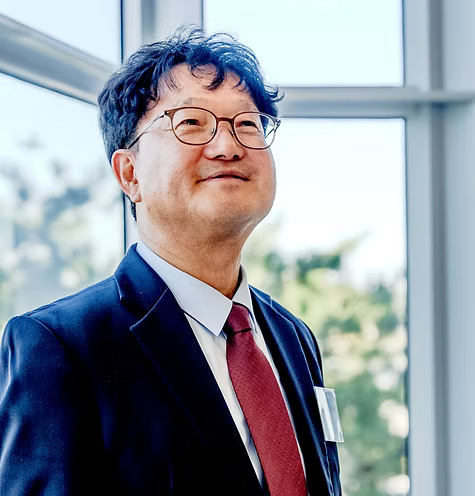
Shin Won-sop, President of the World Forum on Forest Therapy, received his Bachelor’s degree in Forestry from Chungbuk National University, a Master’s degree in Forestry from the University of New Brunswick in Canada, and a Ph.D. in Forestry from the University of Toronto. After serving as a full-time instructor and assistant professor in the Department of Forest Science at Chungbuk National University’s College of Agriculture, he was a visiting professor at the University of Idaho in the US from 1996 to 1997, Dean of the Department of Forest Science at Chungbuk National University from 1998 to 2000, a visiting researcher at the Finnish Forest Research Institute from December 1998 to February 1999, Director of the University Forest at Chungbuk National University from 2001 to 2003, and a visiting professor at the University of British Columbia in Canada from 2003 to 2004. He was appointed as the 30th Minister of the Korea Forest Service in March 2013, serving until July 2017, and served as the Chair of the Committee on Forestry at the Food and Agriculture Organization (FAO) from 2017 to 2020. He served as a member of the Forest Policy Evaluation Committee of the Korea Forest Service and Vice President of the Korea Forum on Forest Therapy, and since 2017, he has been educating the next generation as a professor in the Department of Forestry and the Graduate School of Forest Therapy at Chungbuk National University’s College of Agriculture, Life and Environment Sciences.
Transition of Forest Values: From Material Production to Ecosystem and Well-being Services
The value of forests is shifting from a focus on material production to non-material services. In the past, forest policy focused on timber production for national land restoration and economic development. Greening barren mountains on the ruins of war and utilizing them as resources was the task of the era. However, as urbanization and industrialization accelerated since the 2000s, social demand for non-material values provided by forests, such as recreation, healing, and psychological stability, has increased.
This change is an inevitable result of South Korean society entering a stage that values Quality of Life beyond material survival. Pathological issues such as severe stress, burnout, and one of the world’s highest suicide rates have emerged at the forefront of society, demanding new solutions. Physically restored forests are now gaining attention as resources for mental recovery. Forests function as spaces that promote the psychological stability of the public, and their social role is being fundamentally reorganized. This indicates a structural transition in forest policy—from production-oriented approaches to a Quality-of-Life-centered paradigm.
Achievements and Structural Limitations of State-Led Forest Welfare Systems
South Korea is a leading nation in the institutionalization of Forest Welfare. Through the enactment of the ‘Forest Welfare Promotion Act’ in 2015, it established an institutional foundation and built public infrastructure, including national Healing Forests. The country also operates a system to train ‘Forest Healing Instructors’ through 180 hours of professional education and a national qualification exam for individuals with educational backgrounds in medical or forestry fields. This state-led professional workforce system has contributed to establishing qualitative standards for Forest Therapy Services and increasing their reliability.
However, this successful system simultaneously faces structural constraints. Currently, Forest Welfare Services rely on public budgets, and the spaces provided are often limited to national and public forests. This creates structural constraints on both regional scalability and private sector participation. In particular, the lack of an institutional foundation to utilize private forests, which account for more than 60% of total forests, is the primary structural bottleneck for system expansion. In other words, although the state has built an efficient system, its limitations are clearly evident in that its scope of application is restricted. To secure the sustainability and scalability of Forest Welfare, an institutional transition predicated on private sector participation and the utilization of private forests is necessary.
Transition of Forest Therapy: From Wellness Support to Medical Prescription Models
The next stage for Forest Therapy is integration into the formal healthcare system. It aims for therapeutic intervention for specific diseases, moving beyond simple health promotion. Chungbuk National University is collaborating with psychiatrists to develop a clinical model that prescribes structured forest therapy programs as an alternative or complementary intervention to pharmacological treatment for patients with depression. Based on the doctor’s prescription, the patient undergoes a program with a designated Forest Healing Instructor and reports treatment progress through a monitored digital feedback system to the attending physician. The doctor continuously manages the therapeutic process by adjusting the next program based on this feedback.
Such a ‘prescription system,’ which includes diagnosis, prescription, and progress management, is a strategic approach to incorporate Forest Therapy as part of a systematic medical practice. By adopting the language and procedures of medicine, it seeks to establish a foundation for Forest Therapy to secure clinical efficacy and institutional trust within the existing medical framework. Ultimately, the goal is to include Forest Therapy in the national health insurance system, establishing it as a public healthcare service with a sustainable financial structure and accessibility. This can significantly contribute to reducing the burden of medical costs increasing due to an aging population and strengthening a prevention-centric national public health policy.
Scientific Evidence and Mechanisms of Forest Therapy
Securing scientific evidence is absolutely necessary for Forest Therapy to establish itself as a formal prescription model in the medical field. Although the health benefits of forest environments are widely acknowledged, the underlying mechanisms of action have not yet been fully elucidated. Without being able to explain ‘why’ it is effective and ‘how’ it works, Forest Therapy will inevitably remain in the realm of sensory experience or intuitive perception.
To overcome this, rigorous and systematic research is required. Quantitative data is needed to identify which forests with specific environmental factors are effective for which diseases, and how much intensity and time are required. For example, it must be statistically determined what constitutes the optimal dosage (including duration, frequency, and intensity) of forest therapy interventions for specific conditions. As such scientific evidence accumulates, doctors will be able to prescribe Forest Therapy as precisely as medication, leading to the development of standardized protocols and building an industrial foundation capable of replication, verification, and commercialization. Scientific research goes beyond simple academic work; it is the core foundation for Forest Therapy to become institutionalized and sustainable.
Development of a Sustainable Forest Therapy Industry Ecosystem
For Forest Therapy to spread throughout society, a self-sustaining industrial ecosystem based on private sector participation is necessary. It must evolve into a sustainable industry ecosystem that creates jobs and revenue, moving beyond a simple welfare concept. The key is to induce the participation of private forest owners, who hold more than 60% of the national land. To achieve this, an institutional overhaul is needed to define and utilize non-material values such as healing and recreation, which have until now been perceived as free services, as revenue resources for forestry.
Overseas cases serve as excellent references. In Germany, there is a structure where private associations certify public and private forests as Healing Forests, and Forest Healing Instructors pay usage fees to run programs independently in those spaces, thereby creating diversified revenue streams. In Japan, focusing on revitalizing local economies, communities operate a complex tourism industry that links therapeutic programs, accommodations, and healthy diets, based on the scientifically certified health effects of forests.
For small-scale forest owners in South Korea lacking capital, small but specialized programs are a more realistic alternative than large facilities. For instance, this involves targeting niche markets such as adolescents experiencing school violence trauma, office workers facing burnout, and older adults seeking premium wellness. This is closer to a small-scale clinic model with expertise in specific fields, rather than a large general hospital. A division of roles, where the state provides universal services and the private sector offers specialized services tailored to diverse demands, can be a practical strategy to sustainably expand the Forest Therapy industry.
Toward Global Standards: Scaling South Korea’s Forest Therapy Model
South Korea is gaining international attention in the field of Forest Therapy based on its advanced laws and institutions. The Food and Agriculture Organization (FAO) participating as an official partner of the World Forum on Forest Therapy is an example demonstrating this status. Now, South Korea is attempting to expand its successful domestic experience into an international standard, rather than just remaining a single case study. The international network to be formalized through the 2025 forum will serve as a core platform to institutionally support this. This organization will continuously build upon the forum’s achievements and function as a global coordination platform for aligning policies, research, and practices in forest therapy across countries.
This movement is a strategy to translate South Korea’s leading experience into institutional and normative leadership at the global level. For example, by proposing South Korea’s strict Forest Healing Instructor qualification system as an international benchmark, the country’s institutional achievements can be established as global standards. Moving beyond a mere success story, this is a process for South Korea to position itself as a practical hub nation that proposes policy directions and operational principles in the field of Forest Therapy.
Source: Planet03 (2025)
