
World Forum on Forest Therapy (WFoFT) | Alix Françoise: Urban Forests as Core Infrastructure for Healthy and Sustainable Cities
Alix Françoise, Technical Advisor at the Food and Agriculture Organization of the United Nations (FAO), highlighted critical public health challenges associated with rapid urbanization in her presentation, “Functions of Urban Forests and Human Well-being.” She emphasized that urban forests provide various socio-environmental benefits, including temperature regulation, air quality improvement, and the promotion of mental health. However, she also stressed the importance of policy priorities, citizen participation, and international cooperation to address inequalities in access to urban forests, space constraints, and management deficiencies. Through the “Green Cities Initiative,” the FAO aims to systematically leverage the full potential of urban forests to create healthy and happy cities.
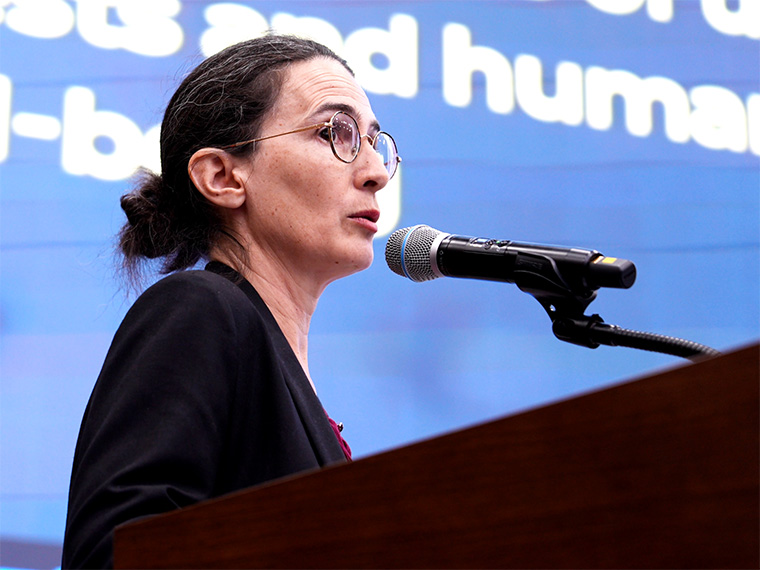
As a Technical Advisor for the FAO’s Green Cities Initiative, Alix Françoise works to achieve tangible improvements in the health and well-being of urban residents worldwide by integrating urban and peri-urban forestry, agriculture, and circular bioeconomy into the fabric of urban life. Previously, she held operational and research positions for 15 years at the Agence Française de Développement, a French public development financial institution, where she supported the sustainable development of cities in the Global South with a focus on ecosystem-based adaptation.
The Importance of Urban Forests in the Era of Urbanization
In an increasingly urbanizing world, the impact of urban forests on human health and well-being is growing. On the 28th, during the World Forum on Forest Therapy (WFoFT), Alix Françoise, Technical Advisor for the FAO’s Green Cities Initiative, delivered a keynote speech titled “Functions of Urban Forests and Human Well-being: Insights for Maximizing Benefits,” where she highlighted the significance of urban forests and presented practical strategies for maximizing their benefits.
Urbanization Trends and Emerging Health Challenges
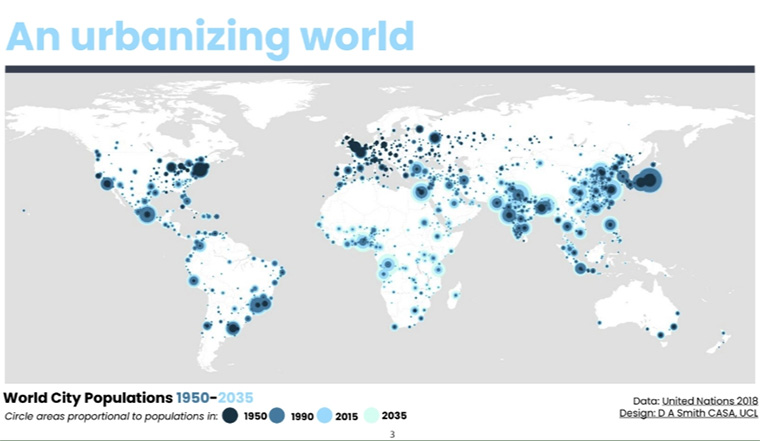
Advisor Françoise underscored the trend of rapid urbanization, noting that the global urbanization rate increased from 30% in 1950 to 54% in 2015, and is projected to reach 68% by 2050. She further noted that urban growth is accelerating particularly in Asia, Africa, and the Global South.
While this urbanization presents opportunities for economic and social development, it also poses significant challenges. Advisor Françoise pointed out that approximately 91% of urban populations are exposed to polluted air, leading to 4 million premature deaths annually. She also explained that noise pollution is the second most harmful environmental factor to health in Europe after air pollution, and that a lack of physical activity is linked to increased rates of non-communicable diseases and depression. Furthermore, she emphasized that climate change is exacerbating urban health issues, with the Urban Heat Island Effect causing temperatures in city centers to be up to 10°C higher than in surrounding areas. She identified the lack of green space and the “distance” from nature as common factors underlying all these issues.
Definition and Diverse Benefits of Urban Forests
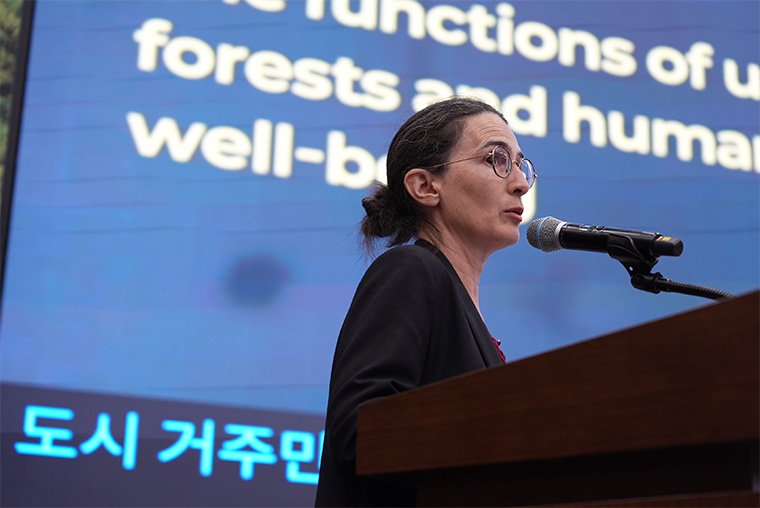
In 2016, the FAO released guidelines on urban forestry, defining urban forests as networks or systems encompassing all forest groups and individual trees located in urban and peri-urban areas. Advisor Françoise explained that these include various forms—such as pocket parks, street trees, and green roofs—serving as a foundational component of urban green infrastructure and bridging the gap between rural and urban areas.
Urban forests provide a wide array of social, economic, and environmental benefits. Socio-environmental benefits, in particular, encompass both health and ecosystem benefits and are deeply interconnected. Urban forests promote physical and mental health through temperature regulation, heat stress mitigation, air and water quality improvement, and biodiversity enhancement. Research shows that trees can lower urban temperatures by 2–8°C, mitigate the urban heat island effect, improve mental health and worker productivity, and foster social interaction.
Unequal Access and Challenges to Overcome
Advisor Françoise noted that the benefits of urban forests are currently distributed very unequally. Citing imbalances in green space coverage in African cities as an example, she explained that inequalities exist at geographic, intra-city, and individual levels. She also highlighted the gender gap, noting that women tend to visit natural areas and urban green spaces less frequently due to safety concerns, with studies in the UK indicating that women feel three times more anxious in urban parks than men.
To overcome these inequalities and maximize the benefits of urban forests for everyone, she presented four primary challenges:
- Space Constraints: Urban forests compete with other land-use priorities such as roads, infrastructure, and housing. To address this, it is essential to adopt urban planning policies that prioritize green spaces, create diverse and context-appropriate green areas—such as pocket parks, micro-forests, and vertical gardens—and implement multifunctional land use.
- Urban Forest Management: Maintenance is often inadequate due to a lack of skilled professionals and low awareness of urban forestry. Necessary solutions include educational programs and certification systems for professional development, citizen participation programs, and the creation of urban forest inventories using digital tools such as 3D modeling, remote sensing, and satellite imagery.
- Public Awareness and Participation: Issues include low environmental awareness, lack of citizen involvement, stakeholder conflicts, and insufficient cooperation in decision-making. Overcoming these requires raising awareness and encouraging participation through tree-planting events, educational programs, the revitalization of knowledge and practice communities, and the hosting of local and international forums.
- Institutional and Economic Barriers: Urban forests often hold low priority on policy agendas, face budget shortfalls, and lack minimum standards. There is a need to establish minimum standards, build business cases by valuing urban forests and ensuring financial viability, integrate urban forestry into climate action plans, develop guidance documents, and strengthen public-private partnerships.
FAO Green Cities Initiative and Future Prospects
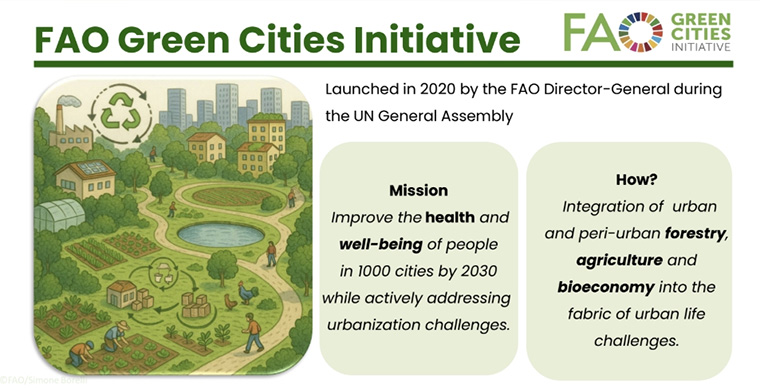
Advisor Françoise emphasized that urban forests have not yet become mainstream and require a long-term vision, multi-stakeholder participation, cross-sectoral coordination, and above all, political will. Through the ‘Green Cities Initiative’ launched in 2020, the FAO aims to improve the health and well-being of people in 1,000 cities by 2030. This is achieved by integrating urban and peri-urban forests, agriculture, and the bioeconomy into the fabric of urban life.
The FAO conducts various activities, including projects in developing countries, knowledge sharing through webinars, and the publication of urban forest guidelines. Additionally, it certifies cities committed to urban forest management through the “Tree Cities of the World” program. Currently, 210 cities participate, and she encouraged Korean cities to join as well.
Advisor Françoise concluded by asserting, “Urban forests should be understood not only as green infrastructure, but as essential public health infrastructure”. She emphasized that fully realizing their potential requires interdisciplinary cooperation, multi-stakeholder coordination, and a shift in mindset from both authorities and the public. Reframing urban forests as the backbone of urban and public health infrastructure will be critical to creating healthy and happy cities of the future.
Source: Planet03 (2025)
